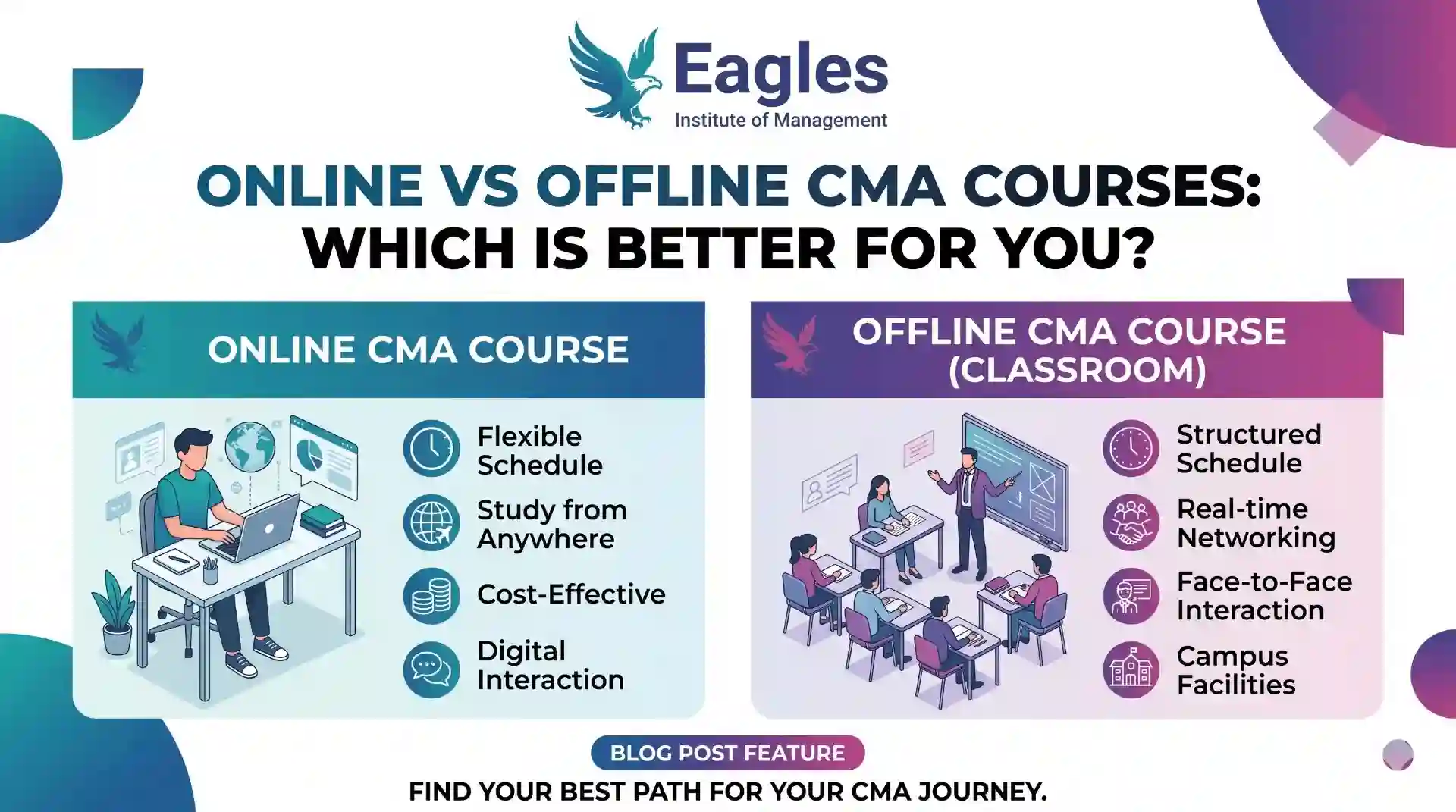
Online vs Offline CMA Courses: Which Is Better for You?
Choosing a CMA course is already a major decision for many commerce students. But before even starting the journey, another question usually comes up should you study through online classes or join an offline campus program? Over the last few years, this discussion has become more common among students across Kerala, especially among Plus Two commerce students and B.Com aspirants who want to build a serious career in finance, accounting, auditing, or management accounting. Parents are also more involved in this decision now because the learning environment directly affects discipline, confidence, and long-term results. The truth is, there is no single answer that fits everyone. Some students perform exceptionally well in online CMA coaching, while others struggle without classroom structure. In the same way, offline learning works brilliantly for many students, but not every learner is comfortable with a strict campus-based routine. The better option depends on your learning style, career goals, self-discipline, environment at home, and the kind of support system you need during preparation. Before deciding, it helps to understand how both systems actually work in real student life not just in advertisements or brochures.
Understanding the Nature of CMA Preparation
CMA is not a short-term certification that can be completed through casual studying. Whether it is CMA India or CMA USA, the course demands consistency, conceptual clarity, regular practice, and strong analytical thinking.
Students usually deal with subjects like:
- Financial Accounting
- Cost Accounting
- Taxation
- Financial Management
- Corporate Laws
- Strategic Management
These are not subjects that can be mastered by memorizing theory alone. A student must understand practical application, problem-solving methods, exam strategies, and time management techniques. That is why the learning environment matters more than many students initially realize. A good CMA preparation system is not only about classes. It is also about mentorship, academic monitoring, peer motivation, doubt-clearing support, revision structure, and emotional consistency throughout the course.
Why Many Students Prefer Online CMA Courses
Online CMA coaching became highly popular after digital learning platforms improved across India. Students from smaller towns and rural areas suddenly gained access to experienced faculty without relocating to major cities. For many students in Kerala, especially those balancing college alongside professional studies, online learning feels flexible and convenient.
One of the biggest advantages is accessibility.
A student from Malappuram or Valanchery can attend classes from experienced CMA trainers without daily travel. Recorded sessions also help students revise difficult topics multiple times. This becomes useful during exam preparation when concepts need repeated revision. Online learning also provides flexibility in scheduling. Some students are more productive late at night, while others prefer early morning study sessions. Digital platforms allow learners to create personalized study routines. Offline residential coaching often includes accommodation, food, travel, and campus expenses. Online courses may reduce several of these costs, making professional education more affordable for some families. For degree students doing B.Com or BBA, online CMA coaching sometimes becomes the only practical option because managing college schedules and travel together can be exhausting.
There is also a growing group of self-motivated students who genuinely perform well in independent learning environments. These students usually:
- Maintain personal discipline
- Follow study schedules seriously
- Revise consistently
- Avoid distractions during online sessions
- Ask doubts actively
- Stay focused without external pressure
For such learners, online CMA preparation can absolutely work.
The Challenges Students Face in Online CMA Learning
Even though online learning offers convenience, many students underestimate the level of self-control required.
This is where problems usually begin.
A student may attend classes regularly for the first few weeks, but gradually distractions increase. Mobile notifications, social media, inconsistent sleep schedules, family interruptions, and lack of study pressure can slowly reduce concentration. Unlike school classrooms, online learning gives freedom but freedom without discipline often affects performance. Many students also hesitate to ask doubts during virtual sessions. In offline classrooms, faculty can easily identify confusion through interaction and body language. Online classes make this harder.
Another issue is isolation.
Professional courses can become mentally exhausting over time. Students preparing alone from home may lose motivation, especially when exams become stressful. Without peer discussions and healthy academic competition, consistency becomes difficult for some learners. Parents also frequently notice that students attending online classes appear “busy” without actually completing productive study hours. This creates uncertainty about whether the student is truly progressing.
Why Offline CMA Coaching Still Holds Strong Value
Even after the rise of digital learning, offline CMA coaching continues to remain highly effective, especially for students beginning professional commerce education immediately after Plus Two. There is a reason many successful commerce professionals still recommend structured classroom preparation during the early stages of a career. Offline learning creates an academic ecosystem. Students wake up with a routine, attend regular classes, interact with faculty directly, participate in discussions, write tests consistently, and stay connected to a focused peer group. This environment naturally improves discipline and seriousness toward the course. For younger students, especially those between 16 and 19 years old, this structure can make a major difference. Many students entering CMA preparation directly after school are still adapting to independent academic life. Offline coaching helps bridge that transition smoothly.
Another major advantage is immediate faculty interaction.
When students struggle with accounting problems or complex costing concepts, instant clarification improves understanding faster than delayed online doubt sessions. Classroom discussions also expose students to different problem-solving approaches.
Peer learning is another underrated benefit.
Students preparing together often motivate each other during difficult phases. Group revisions, discussions before exams, and competitive academic environments help maintain consistency over long preparation periods. Parents also feel more confident when students study within a monitored academic campus environment that provides regular guidance and structured progress tracking. This becomes especially important for residential commerce campuses that combine professional coaching with degree education and career mentoring.
The Importance of Learning Environment in Professional Courses
One thing experienced educators observe repeatedly is that academic environment shapes student behavior. A student surrounded by focused learners usually becomes more serious automatically. On the other hand, students studying alone at home sometimes struggle to maintain momentum, even if they are academically capable. Professional courses like CMA are long journeys. Motivation naturally fluctuates. During such phases, the surrounding environment matters enormously. This is why integrated commerce campuses in Kerala have become increasingly popular among CMA and ACCA aspirants. Students are not only attending classes they are living within a system designed around professional education goals.
The atmosphere itself supports consistency.
Study hours become regular. Faculty monitoring becomes easier. Students stay connected to career-oriented peers. Even small habits like test preparation, revision planning, and time management improve gradually. For many students, this structured environment becomes the biggest advantage of offline learning.
Which Option Is Better for Degree Students?
Degree students often face a different situation compared to Plus Two graduates.
A B.Com or BBA student may already have college schedules, assignments, university exams, internships, or part-time responsibilities. For them, flexibility becomes more important. In such cases, online CMA coaching can work effectively if the student is genuinely disciplined and capable of balancing multiple responsibilities independently. However, some degree students still prefer offline weekend batches or hybrid coaching models because professional subjects require deeper conceptual understanding than regular university studies.
The right decision depends on personal learning habits.
A student who struggles with procrastination may benefit more from classroom accountability. Meanwhile, an organized and self-driven learner may successfully manage online preparation alongside college education.
What Parents Should Consider Before Choosing
Parents often focus mainly on fees or convenience while comparing CMA coaching options. But long-term academic support matters far more than short-term savings. Before choosing online or offline CMA coaching, parents should evaluate:
- The student’s study discipline
- Ability to focus independently
- Comfort with digital learning
- Need for mentorship and monitoring
- Emotional maturity
- Time management habits
- Academic consistency in previous studies
Some students simply need a guided ecosystem to perform at their best. Others genuinely flourish with flexibility. There is no shame in either approach. The important thing is choosing a system that supports the student’s actual learning behavior instead of selecting based only on trends or marketing claims.
The Rise of Hybrid Learning Models
Interestingly, many institutions are now combining the strengths of both online and offline learning. Hybrid CMA coaching models are becoming more practical because students want flexibility without losing classroom support. For example, students may attend regular offline classes while also receiving recorded sessions for revision. Some campuses provide digital practice portals, online mock tests, and faculty support even after classroom hours. This balanced approach helps students maintain structure while still benefiting from modern learning convenience. For commerce students preparing for competitive professional careers, this combination is often highly effective.
So, Which CMA Learning Method Should You Choose?
If you are highly self-disciplined, comfortable studying independently, and capable of managing distractions effectively, online CMA courses may suit you well. If you need regular guidance, classroom interaction, academic pressure, peer motivation, and structured monitoring, offline coaching may provide a stronger foundation. Neither method is automatically superior. What matters is how well the learning environment matches your personality, study habits, and career goals. Many successful CMA professionals have emerged from both systems. The difference usually comes down to consistency, commitment, mentorship, and the willingness to stay focused throughout the journey. For students in Kerala aiming to build strong careers in accounting, auditing, finance, or Gulf-based opportunities, the decision should be made carefully not emotionally. A professional course is not only about passing exams. It is about building discipline, confidence, communication skills, and long-term career readiness. The right learning environment can quietly shape all of these areas over time. Learn more about Eagles Educity or contact us today.